Community Conversations

Inclusivity and Diversity
In an age where digital interactions often overshadow face-to-face connections, building community ties through local projects has never been more crucial. Community events not only foster relationships among people from a variety of backgrounds, but also enhance overall quality of life for people and the spaces where we gather together.
Whether it’s a community garden, a improving the neighbourhood, or a local art initiatives, getting together to share the cornerstones of community- our foods, our music, our cultural exchanges and reciprocity serve as a catalyst for connection and collaboration that can explore what it looks like to co-curate spaces where all are welcome.
Grove is a joyful, inclusive gathering rooted in community, creativity and shared voices. Curated by musician and community facilitator Rachael Dadd, Grove weaves together diverse singing groups, musicians and local communities to celebrate connection through music, participation and care. By creating accessible, welcoming spaces and amplifying voices that are often unheard, Grove nurtures belonging, collaboration and the simple, powerful act of singing together.
Inclusivity & Diversity in Music: How Grove Amplifies Unheard Voices
At its core, Grove is a celebration of community, inclusivity, and diversity — not just as abstract values, but as lived experiences brought to life through music, creative collaboration, and shared connection. Built around gatherings in Bristol, Grove offers life-enhancing events where people from all walks of life come together to share music, sow seeds, and lift up each other’s voices.
Organised and produced by Rachael Dadd, a celebrated Bristol-based singer, songwriter, and community music facilitator, Grove brings together an eclectic mix of singing groups and performers, each representing different backgrounds, experiences, and creative expressions.
Rachael’s vision for Grove is rooted in her long-standing commitment to community music. Over the past few years she has expanded her work beyond solo performance into fostering inclusive spaces where people can make music together. She leads community choirs like OAK Choir (Of All Kin) and contributes to groups such as BYOB Choir (Bring Your Own Baby), which welcomes parents and babies to sing together, and MMILK, a mothers-in-music improv collective that encourages exploration, support, and expressive play.
What sets Grove apart is its intentional integration of diverse communities through shared creative experiences. At Grove events, musical offerings come from the Dovetail Refugee Orchestra, the OAK Choir, BYOB Choir, MMILK, and the Beehive Singing Circle — the latter being an inclusive intergenerational group that welcomes adults with learning disabilities alongside other community members.
These groups aren’t just performers; they are communities. They bring together people of different ages, cultures, abilities, and life experiences — from refugees and parents with babies to individuals exploring improvisation and people forming friendships across cultural lines. The Refugee Orchestra, for example, offers a space where people who have often been marginalised or displaced can express their cultural heritage and musical voices with dignity and joy.
Grove also actively removes barriers to participation. Events are fully wheelchair accessible and provide free tickets for asylum seekers, carers, and children under 12, ensuring that economic or physical barriers don’t keep people from being part of the collective music making.
But inclusivity in Grove goes beyond physical accessibility — it is about community belonging and mutual recognition. Participants are encouraged to take part, sing, collaborate, and create with each other rather than simply be passive spectators. This emphasis on shared experience helps amplify unheard voices and conversations in ways that traditional performance spaces sometimes overlook. People who might rarely be invited to the stage find themselves at the centre of a living, breathing musical tapestry.
The events also weave in community gardening and creative exchanges like photography exhibitions and clothes swaps, reinforcing the idea that music and creativity can be holistic, interconnected catalysts for connection.
Rachael’s work with these groups reflects her personal ethos: joy, belonging and wellbeing over perfection. Her songwriting for choirs like OAK and her facilitation across community ensembles underscore how inclusive music-making can nurture resilience, mutual respect, and shared joy.
In a world where many voices go unheard, Grove is a living reminder that music can be a bridge — inviting everyone not just to listen, but to participate, share, and belong. Through its diverse communities and shared creative spaces, it stands as a powerful example of how inclusivity and diversity enrich not just the sound we make together, but the stories we live together.

Seed Planting
At Grove, planting seeds has always been about more than what grows in the ground. From our earliest gatherings, we have brought soil, seeds and hands together as a way of slowing down, connecting, and remembering that growth — whether in gardens or communities — happens best when it is nurtured collectively.
Planting Seeds: Growing Grove, Growing Community
At Grove, planting seeds has always been about more than what grows in the ground. From our earliest gatherings, we have brought soil, seeds and hands together as a way of slowing down, connecting, and remembering that growth — whether in gardens or communities — happens best when it is nurtured collectively.
At previous Grove events, seed planting has been a simple but powerful act. Alongside singing, sharing food and making music, people have gathered around trays of compost, passing seeds from palm to palm, talking quietly or laughing as they worked. Some planted with children, some alone, some for the first time. Each seed was a small offering — a moment of care, intention and hope. Participants took seeds home, planted them locally, or added them to shared community spaces, extending Grove’s presence beyond the day itself.
These moments grounded our events in something tangible. Just as our music brings together voices from many backgrounds — refugee communities, parents and babies, intergenerational choirs, improvisers and first-time singers — planting seeds brings together people with different skills, stories and relationships to the land. Everyone begins in the same place: with earth, patience and trust.
Future forward thinking
Looking ahead, Grove’s vision is to take this seed-planting practice further, deepening its connection with local community gardens, growing projects and grassroots initiatives. We imagine future events where Grove partners with neighbourhood allotments, rewilding projects, schools and community food growers — where seeds planted during a gathering continue to grow under shared stewardship long after the music fades. In this way, Grove becomes part of a wider ecosystem of care, linking creativity, sustainability and community resilience.
Seed planting offers a powerful metaphor for how we work together. When we plant seeds, we don’t demand immediate results. We prepare the ground, create the right conditions, and trust the process. Community works the same way. Through shared singing, conversation and simple acts of care, Grove plants seeds of connection — between strangers, across cultures, between generations. Some of these connections grow quickly; others take time. All are valuable.
Values and The Future
In a world that often prioritises speed and productivity, planting seeds reminds us to value slow growth and collective responsibility. A garden doesn’t thrive because of one person alone — it thrives because many people tend it, notice it, and return to it. Similarly, a healthy community is built through repeated acts of participation, listening and mutual support.
For Grove, seed planting is an invitation: to imagine what could grow if we continue to gather with intention. It asks us to think beyond individual events and towards something enduring — a network of relationships, shared resources and creative spaces that are nourishing, inclusive and sustainable.
As we look to future gatherings, we carry this vision forward. Each song sung, each seed planted, each conversation shared becomes part of a larger story — one where community is not just something we attend, but something we actively grow together.

Sharing Music
Across cultures, continents and centuries, music has been at the core of human community. Long before written language, before formal institutions, people gathered to sing — to mark seasons, honour grief, celebrate birth, tell stories and strengthen bonds. Music has always been one of the most instinctive ways we connect, communicate and belong. It is not an added extra to human life; it is foundational.
The Medicine of Song: Music at the Heart of Community
At Grove, we are guided by this understanding: that music and singing are part of our shared human nature. When we sing together, something ancient wakes up. Breath synchronises. Hearts slow or lift. Barriers soften. Whether voices are polished or tentative, trained or entirely new, the act of singing together carries a quiet kind of medicine — one that nourishes emotional wellbeing, collective resilience and a sense of shared humanity.
Around the world, community singing has long been a source of strength. Work songs, lullabies, protest songs, spirituals and folk traditions have helped communities survive, organise, heal and celebrate. These songs didn’t belong to professionals or stages — they belonged to everyone. They were learned by listening, by joining in, by being part of something larger than oneself.
The Importance of Community Engagement Initiatives
This is why community singing groups matter so deeply. They offer spaces where people are welcomed not for how they sound, but for the fact that they show up. Groups like intergenerational choirs, refugee orchestras, parent-and-baby singing circles, improvisation collectives and open community choirs all create vital containers for connection. They hold stories, cultural memory and shared experience. They allow voices that are often unheard to be felt and valued.
Singing in community can be transformative on an individual level — helping people find confidence, release emotion, process change or feel less alone. But its true power lies in what it creates collectively. When people sing together regularly, trust builds. Relationships form. Difference becomes something to listen to rather than fear. Music becomes a shared language where words might fail.
Grove exists as a celebration of this truth. By bringing together diverse community singing groups in one shared space, Grove honours the many ways music lives in people’s lives. Each group carries its own rhythm, history and intention, yet when they gather, something larger emerges — a living, breathing expression of community through sound.
Grove is not about performance in the traditional sense. It is about participation, presence and exchange. It invites people to experience music not as spectators, but as contributors. In doing so, it mirrors how music has always functioned at the heart of community: as a shared act, shaped by many voices.
In a world that often feels fragmented and fast-moving, singing together offers a radical return to connection. It reminds us that we are wired for harmony, for listening, for collaboration. It shows us that community doesn’t have to be forced or fixed — it can be grown, gently, through song.
At Grove, we celebrate music not just as art, but as medicine — a force that heals, unites and sustains. Each gathering, each choir, each shared song is a reminder that when we raise our voices together, we are doing something profoundly human. We are remembering who we are, and how deeply we need one another.
Community Voices
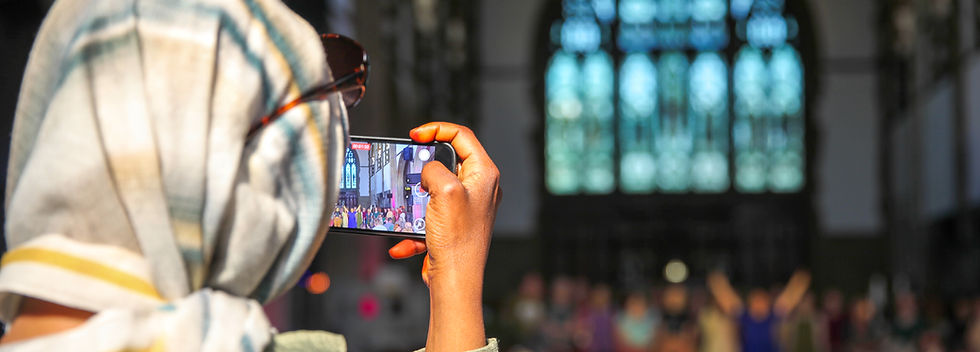
At Grove, community is not something we simply gather — it is something we listen to. Just as seeds are planted and songs are shared, voices are carried into our spaces with care, curiosity and respect. Every community holds stories, conversations and perspectives that often go unheard, particularly those from marginalised or underrepresented groups. Grove exists to create space for those voices — not to speak on behalf of them, but to listen, amplify and evolve alongside them.
Community Voices: Listening, Capturing, and Growing Together
Across our gatherings, voices emerge in many forms. They surface in song, in conversation between strangers, in moments of laughter, reflection or shared silence. Some of these voices are confident and clear; others are tentative, shaped by experiences of exclusion or invisibility. All are valuable. All carry knowledge about how communities survive, adapt and care for one another.
Capturing these voices is both a creative and ethical practice. At Grove, we are interested in gentle documentation — creative ways of holding community expression without extracting or framing it through a single narrative. Audio recordings of shared songs, spoken reflections or ambient soundscapes can preserve the feeling of being together. Photography can capture gestures, relationships and moments of connection rather than staged images. Visual artwork, written fragments and collaborative pieces allow people to express themselves beyond words.
These creative forms offer alternatives to traditional documentation, which can often exclude or oversimplify lived experience. For some, speaking into a microphone feels daunting; for others, singing, drawing, moving or simply being present feels more natural. By offering multiple artistic mediums, Grove makes room for different ways of being heard.
Sharing this work is an act of amplification. When community voices are presented with care — through exhibitions, audio pieces, zines or digital archives — they challenge dominant narratives and create space for more complex, honest conversations. They allow people to recognise themselves and each other, and they invite wider audiences to listen more deeply.
Crucially, Grove does not see community voices as something to be captured once and archived. These expressions are part of an ongoing conversation. As stories, sounds and images emerge, they actively shape how Grove evolves. The community doesn’t just participate in Grove — it co-creates it. The themes of future gatherings, the forms of creative exchange, and the collaborations we pursue are influenced by what the community expresses, questions and needs.
This approach mirrors the values at the heart of Grove: responsiveness, care and shared ownership. Just as a song changes depending on who is singing, Grove changes depending on who is present. Listening becomes a form of leadership. Amplification becomes an act of solidarity.
In a world where marginalised voices are often filtered, misrepresented or ignored, Grove chooses slowness, presence and creativity. By holding space for community conversations and capturing them through artistic practice, we create something living — a growing archive of shared experience that reflects the richness and diversity of the people within it.
Grove’s intention is not to define community, but to make space for it to speak. As voices are heard, shared and celebrated, Grove continues to grow — shaped by the people who gather, the stories they carry, and the creative ways they choose to express them.

Clothes Swap
At Grove, the clothes swap is far more than a practical exchange of garments. Like seed planting, singing and shared food, it is a way of bringing people together through acts of reciprocity, care and mutual support. It offers a simple invitation: bring what you no longer need, take what you do, and trust the collective to hold balance.
Circulation and Care: The Clothes Swap at Grove
In a culture shaped by fast fashion and overconsumption, clothes swaps slow things down. They encourage us to pause, to notice the stories held within fabric, and to reconsider our relationship with resources. At Grove gatherings, clothes arrive carrying traces of their previous lives — a jumper worn through winters, a dress connected to a celebration, a child’s jacket outgrown too quickly. As these items change hands, new stories begin.
The clothes swap creates a space where exchange replaces transaction. There is no money involved, no hierarchy of value, no pressure to give and receive equally. Instead, participants contribute what they can and take what feels right. This openness fosters trust and generosity, reinforcing the idea that community thrives when resources circulate rather than accumulate.
Cultural sharing naturally unfolds within this exchange. Clothing is deeply personal and often tied to identity, heritage and self-expression. At Grove, garments from different cultures, styles and life stages sit side by side, inviting curiosity and conversation. People ask where something came from, how it was worn, or what it means to someone. In these moments, clothing becomes a starting point for connection — a bridge between different lived experiences.
The clothes swap also plays an important role in resource distribution. By making good-quality clothing freely accessible, it helps meet practical needs while preserving dignity and choice. This is especially significant in inclusive spaces like Grove, where people from diverse economic backgrounds gather together. The swap quietly redistributes resources without singling anyone out, reinforcing equality and shared ownership.
There is also a deeper metaphor at work. Just as voices are shared through song and seeds are planted for future growth, clothing circulates as a symbol of community care. It reminds us that what no longer serves one person may be exactly what another needs — and that letting go can be an act of generosity rather than loss.
Importantly, the clothes swap is not curated or controlled. It evolves with each gathering, shaped by who is present and what they bring. This responsiveness reflects Grove’s wider ethos: community-led, adaptable and rooted in trust. The swap becomes a living expression of how Grove functions — not as a fixed structure, but as a shared ecosystem.
In a world that often isolates people through consumption and ownership, the clothes swap offers a different model. It invites participation over possession, connection over accumulation. Through this simple practice, Grove demonstrates how everyday acts can nurture sustainability, cultural exchange and collective wellbeing.
At Grove, even the smallest gestures — passing on a coat, trying on a new shirt, sharing a story — become part of something larger. The clothes swap reminds us that community is built not only through big ideas, but through thoughtful, practical acts of care that help us look after one another.

Food
Food has always been one of the most powerful ways humans come together. Across cultures and throughout history, meals mark celebration and mourning, welcome strangers, and strengthen bonds. Recipes are carried through generations, shaped by place, memory and survival. At Grove, food is not an add-on to our gatherings — it is a cornerstone that nourishes every other element of what we do.
Breaking Bread: Food as a Cultural Cornerstone at Grove
When people share food, they share more than sustenance. They share stories, heritage and care. At Grove gatherings, meals are often inspired by ancestral recipes and cooked with nourishing, thoughtful ingredients. These dishes carry the flavours of different cultures and family traditions, quietly honouring the many lineages present in the space. Eating together becomes an act of listening — to histories, to difference, and to what connects us.
Food supports the rhythm of a Grove event. It creates natural pauses between singing, seed planting, conversation and creative exchange. People who may not yet feel ready to sing together can begin by sitting side by side, passing plates, exchanging smiles. In this way, food becomes an entry point — a gentle invitation into community.
Sharing meals also reinforces equality. Everyone eats the same food, gathered around shared tables or open spaces. There is no separation between performers and audience, hosts and guests. This dissolving of hierarchy reflects Grove’s wider ethos of participation and belonging. Food reminds us that, at our most basic level, we all need nourishment — and we all deserve it.
Ancestral recipes hold particular significance. They carry knowledge passed down through families and cultures — knowledge about seasons, ingredients, preservation and care. When these recipes are cooked and shared at Grove, they bring the past into the present, allowing memory and identity to sit alongside new connections. For those whose cultural traditions have been disrupted or marginalised, sharing food can be a powerful act of visibility and pride.
The choice of nourishing ingredients also reflects Grove’s commitment to wellbeing and sustainability. Food that is thoughtfully sourced and prepared supports the physical energy needed for singing, movement and participation. It grounds people in their bodies, helping them feel safe, present and cared for — essential conditions for creative expression and connection.
Like music, food speaks a universal language. It crosses linguistic and cultural boundaries with ease, offering comfort, curiosity and pleasure. A shared meal can soften difficult conversations, spark unexpected friendships, and create moments of quiet joy. At Grove, these moments ripple outward, strengthening the collective experience of the gathering.
Food, like song, seed and cloth, circulates. It is prepared, shared, consumed and remembered. Its impact continues beyond the event, carried home in full bellies, shared recipes, and the memory of eating together. In this way, food supports and weaves through all other elements of Grove, helping to create a space that is nourishing not just in body, but in spirit.
At Grove, to eat together is to belong. It is a reminder that community is built through everyday acts of care — through cooking, sharing and receiving. Around the table, as in the circle of song, we remember that we are connected, sustained, and stronger together.